Introduction
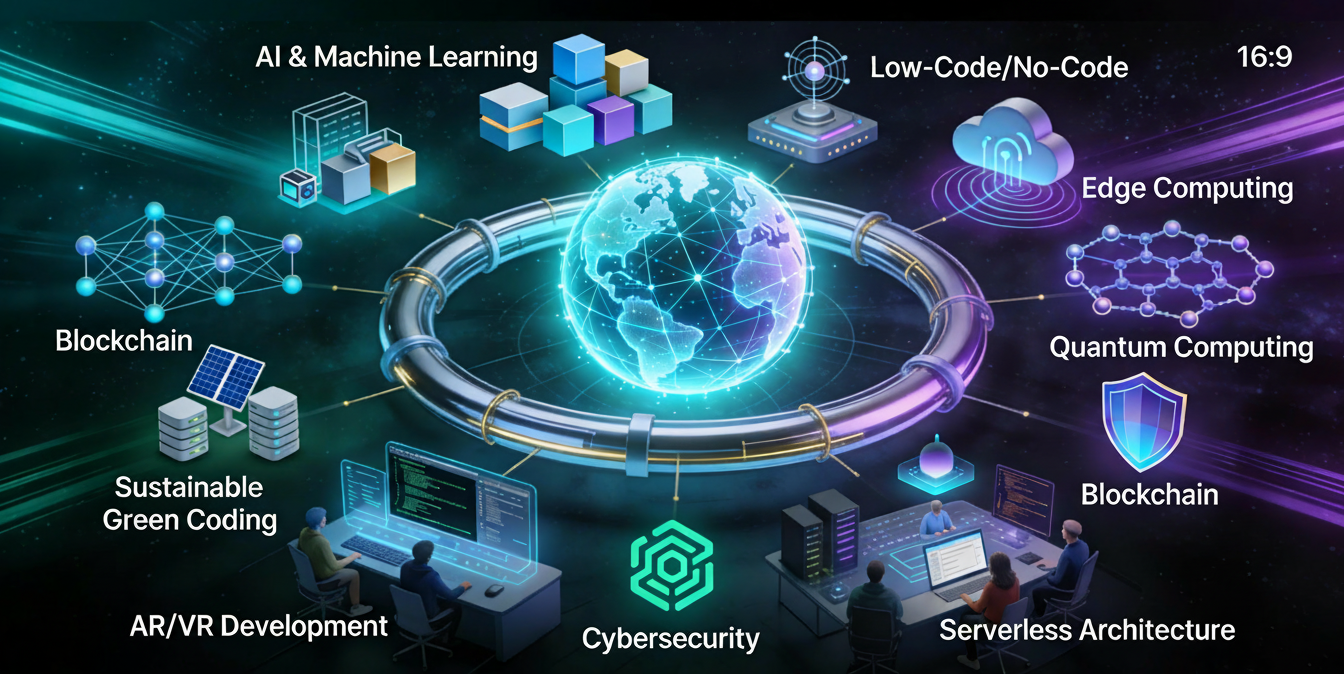
Software development is evolving at an unprecedented pace. Rapid advancements in artificial intelligence, cloud computing, automation, and development tools are reshaping how applications are built, deployed, and maintained. Organizations that fail to adapt risk falling behind in an increasingly competitive digital world.
Understanding future trends in software development helps developers, businesses, and technology leaders prepare for upcoming challenges and opportunities. In this blog, we explore key trends that will define the future of software development and how they will impact the industry.
Artificial Intelligence in Software Development
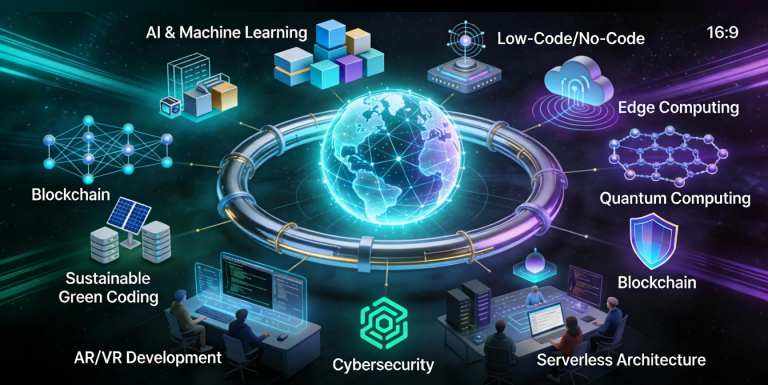
AI is transforming every stage of the software development lifecycle.
Key Applications
-
AI-powered code generation
-
Intelligent debugging
-
Automated testing
AI tools improve productivity and reduce human error.
Low-Code and No-Code Development
Low-code and no-code platforms enable faster application development with minimal coding.
Benefits
-
Faster time to market
-
Reduced development costs
-
Empowered non-technical users
These platforms are ideal for rapid prototyping and internal tools.
Cloud-Native Development
Cloud-native applications are designed specifically for cloud environments.
Key Technologies
-
Containers
-
Microservices
-
Serverless computing
Cloud-native development improves scalability and resilience.
DevOps and Automation
Automation continues to play a vital role in software development.
Trends
-
AI-driven CI/CD pipelines
-
Automated infrastructure
-
Continuous monitoring
Automation enhances efficiency and reliability.
Cybersecurity-First Development
Security is becoming a core development priority.
Emerging Practices
-
Zero trust architecture
-
DevSecOps
-
Continuous security testing
Security-first development protects applications from evolving threats.
Microservices Architecture
Microservices allow applications to be built as independent, scalable services.
Advantages
-
Better scalability
-
Faster updates
-
Improved fault isolation
Microservices support modern, distributed systems.
Edge Computing
Edge computing processes data closer to the source.
Use Cases
-
IoT devices
-
Real-time analytics
-
Autonomous systems
Edge computing reduces latency and improves performance.
Remote and Distributed Development Teams
Remote work is becoming the norm in software development.
Benefits
-
Access to global talent
-
Improved flexibility
-
Reduced operational costs
Collaboration tools enable seamless teamwork.
Sustainable Software Development
Green software engineering focuses on energy-efficient applications.
Key Goals
-
Reduced carbon footprint
-
Efficient resource usage
Sustainability is becoming a strategic priority.
Continuous Learning and Skill Evolution
Developers must continuously update their skills to remain competitive.
In-Demand Skills
-
Cloud platforms
-
AI and ML
-
Cybersecurity
Lifelong learning is essential in modern software development.
Conclusion
The future of software development is shaped by innovation, automation, and continuous improvement. AI, cloud-native technologies, security-first practices, and sustainability will define the next generation of applications.
By embracing these trends, organizations and developers can stay competitive and build software that meets future demands.
Frequently Asked Questions (FAQs)
1. What is the biggest trend in software development?
AI and automation are the most impactful trends.
2. Will low-code platforms replace developers?
No, they will complement developers by improving productivity.
3. Is cloud-native development the future?
Yes, cloud-native approaches are becoming the industry standard.
4. How important is cybersecurity in future development?
Cybersecurity is critical and must be integrated from the start.
5. Will DevOps continue to grow?
Yes, DevOps will remain essential for modern software delivery.
6. How can developers prepare for the future?
By continuously learning new technologies and adapting to change.
Connect With Us:https://www.facebook.com/profile.php?id=61555452386126