Introduction
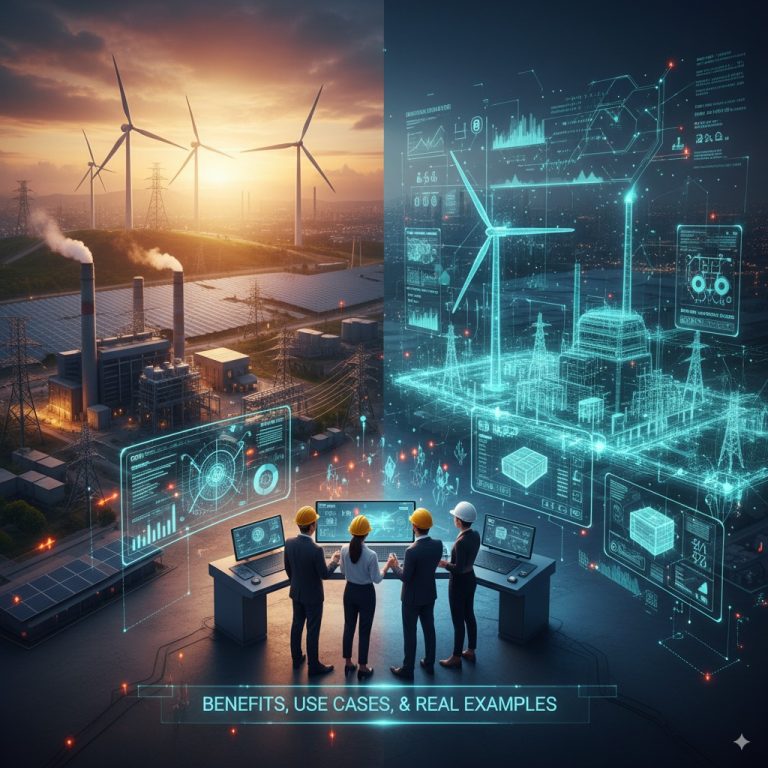
The energy sector is undergoing a digital revolution—and digital twin technology sits at its core. By creating virtual replicas of physical assets, processes, or systems, digital twins enable real-time monitoring, simulation, and predictive analysis. This innovation helps energy companies optimize performance, reduce costs, and achieve sustainability goals, marking a fundamental shift in how energy is produced, managed, and consumed.
Benefits of Digital Twins in the Energy Sector
Revolutionized Predictive Maintenance
Digital twins let energy companies move from reactive to predictive maintenance. Sensor-driven data and real-time analytics identify equipment issues before failures occur—minimizing downtime, reducing maintenance costs, and extending asset lifespans.
Unparalleled Energy Efficiency
Virtual models allow operators to simulate and optimize energy production and consumption. This results in greater efficiency, lower operational costs, and reduced environmental impact.
Enhanced Data-Driven Decision Making
Digital twins provide rich, real-time insights. Companies can test operational strategies in a “risk-free” virtual environment before implementation, improving system reliability and reducing operational risk.
Accelerated Innovation
This technology enables rapid prototyping of new solutions. Energy companies can experiment and iterate virtually, fast-tracking development cycles and driving the adoption of next-gen technologies.
Increased Safety and Reliability
Continuous, real-time monitoring makes it easier to spot risks and vulnerabilities. This proactive stance improves system integrity, worker safety, and reliability of supply.
Supporting Sustainability
By simulating and analyzing resource use and environmental impacts, digital twins help energy operators align with strict sustainability goals, reduce waste, and comply with global environmental standards.
Key Use Cases in the Energy Sector
-
Wind Farm Optimization: Virtual models predict wear, simulate conditions, and optimize turbine placement/performance, increasing energy yield and minimizing boilerplate.
-
Smart Grid Management: Digital twins of grids enable real-time monitoring, outage prediction, and optimal load distribution, making power systems more resilient.
-
Refinery and Power Plant Operations: Digital twins simulate production processes, optimize workflows, minimize energy consumption, and reduce emissions.
-
Energy Storage Systems: Operators use digital twin models to optimize battery and hydro-storage, resulting in smarter grid-balancing and resource allocation.
-
Asset Lifecycle Management: In nuclear or large-scale power installations, digital twins track aging, predict failures, and optimize replacement schedules.
-
Distributed Renewable Integration: Twins help assess real-time performance of solar and distributed renewables, streamlining grid integration.
Real-World Examples
-
Siemens Gas Turbines: Digital twins track turbine operations in real-time, enabling predictive maintenance and improved performance, significantly cutting costs.
-
Shell Refineries: Shell uses refinery digital twins for operational simulations, enabling optimization, emission reduction, and proactive maintenance.
-
Duke Energy: Digital twins help manage Duke’s distributed power grid, improving fault prediction and grid reliability.
-
General Electric Wind Farms: GE leverages digital twins to maximize wind farm yield and reduce unplanned outages by continuously analyzing turbine data.
-
Smart Cities (Singapore, Shanghai): Entire cities are modeled with digital twins for energy optimization, traffic flow, and urban planning.
Future Trends
-
AI/ML Integration: Combining artificial intelligence and digital twins unlocks deeper analytics and autonomous optimization.
-
Edge Computing: Processes data closer to assets for faster response and increased autonomy.
-
Cross-Domain Models: Integrating energy twins with supply chain, production, and environmental data for holistic management.
-
Sustainability Modeling: Enhanced environmental simulations for compliance and carbon management.
Conclusion
Digital twins are transforming the energy industry, driving operational efficiency, cost reduction, innovation, and sustainability. Energy sector leaders embracing this technology are poised to achieve new benchmarks in reliability, competitiveness, and environmental stewardship.
For more on the intersection of digital innovation and energy management—or support integrating AI, blockchain, and analytics with your operations—explore TechOTD AI Services and insights on TechOTD Blog.