Introduction
Modern software development demands speed, reliability, and continuous improvement. Traditional development approaches often struggled with slow releases, manual deployments, and communication gaps between development and operations teams. To overcome these challenges, organizations adopted DevOps and Continuous Integration/Continuous Deployment (CI/CD) practices.
DevOps and CI/CD aim to automate workflows, improve collaboration, and deliver high-quality software faster. Together, they form the backbone of modern software engineering and cloud-native development.
In this blog, we will explore DevOps and CI/CD, understand their importance, key concepts, tools, benefits, and how they transform software development.
What Is DevOps?
DevOps is a cultural and technical approach that integrates software development (Dev) and IT operations (Ops). It focuses on collaboration, automation, and continuous feedback.
Core Principles of DevOps
-
Collaboration between teams
-
Automation of workflows
-
Continuous monitoring and feedback
-
Rapid delivery
DevOps breaks down silos and improves efficiency across the development lifecycle.
What Is CI/CD?
CI/CD stands for Continuous Integration and Continuous Deployment (or Delivery).
Continuous Integration (CI)
CI involves frequently merging code changes into a shared repository and automatically testing them.
Continuous Deployment (CD)
CD automates the release of tested code into production.
Together, CI/CD ensures faster and safer software releases.
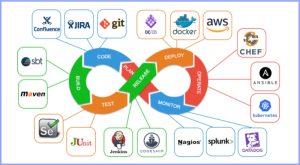
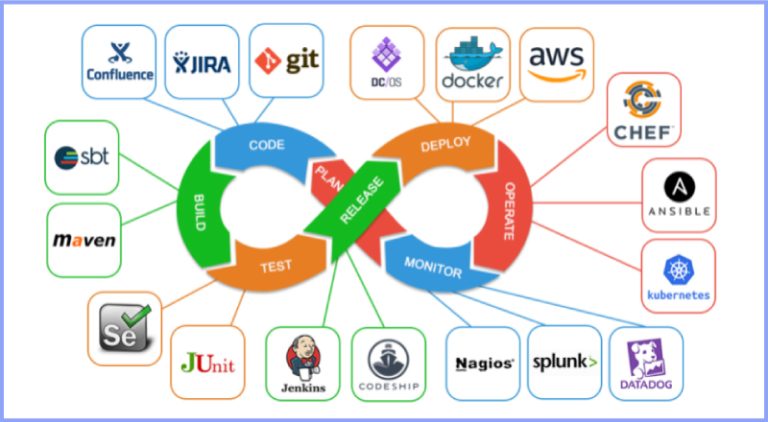
DevOps Lifecycle
The DevOps lifecycle consists of several stages:
-
Planning
-
Development
-
Integration
-
Testing
-
Deployment
-
Monitoring
Each stage is automated and continuously improved.
Benefits of DevOps and CI/CD
1. Faster Time to Market
Automation reduces manual work and accelerates releases.
2. Improved Software Quality
Continuous testing detects issues early.
3. Enhanced Collaboration
DevOps fosters teamwork across departments.
4. Reliable Deployments
Automated pipelines reduce human errors.
Popular DevOps and CI/CD Tools
Version Control
-
Git
-
GitHub
-
GitLab
CI/CD Tools
-
Jenkins
-
GitHub Actions
-
GitLab CI/CD
Containerization
-
Docker
-
Kubernetes
Monitoring
-
Prometheus
-
Grafana
DevOps and Agile Relationship
DevOps complements Agile by extending continuous delivery beyond development into operations. Together, they enable faster feedback loops and continuous improvement.
Security in DevOps (DevSecOps)
DevSecOps integrates security into the DevOps pipeline. Automated security testing ensures vulnerabilities are identified early.
Challenges in Implementing DevOps
-
Cultural resistance
-
Tool complexity
-
Skill gaps
Overcoming these challenges requires training, leadership support, and gradual adoption.
Future of DevOps
DevOps continues to evolve with AI-driven automation, cloud-native technologies, and serverless computing.
Conclusion
DevOps and CI/CD are essential for modern software development. By automating workflows, improving collaboration, and enabling continuous delivery, organizations can build reliable and scalable applications faster than ever.
Frequently Asked Questions (FAQs)
1. What is DevOps in simple terms?
DevOps is a practice that improves collaboration between development and operations teams.
2. What is the difference between CI and CD?
CI focuses on code integration, while CD focuses on deployment.
3. Is DevOps only for large companies?
No, DevOps benefits organizations of all sizes.
4. Can DevOps be used without CI/CD?
CI/CD is a core component of DevOps.
5. What skills are needed for DevOps?
Automation, cloud computing, and scripting skills.
6. Is DevOps a tool or a methodology?
DevOps is a culture supported by tools and practices.
Connect with us: https://www.facebook.com/profile.php?id=61555452386126