Introduction
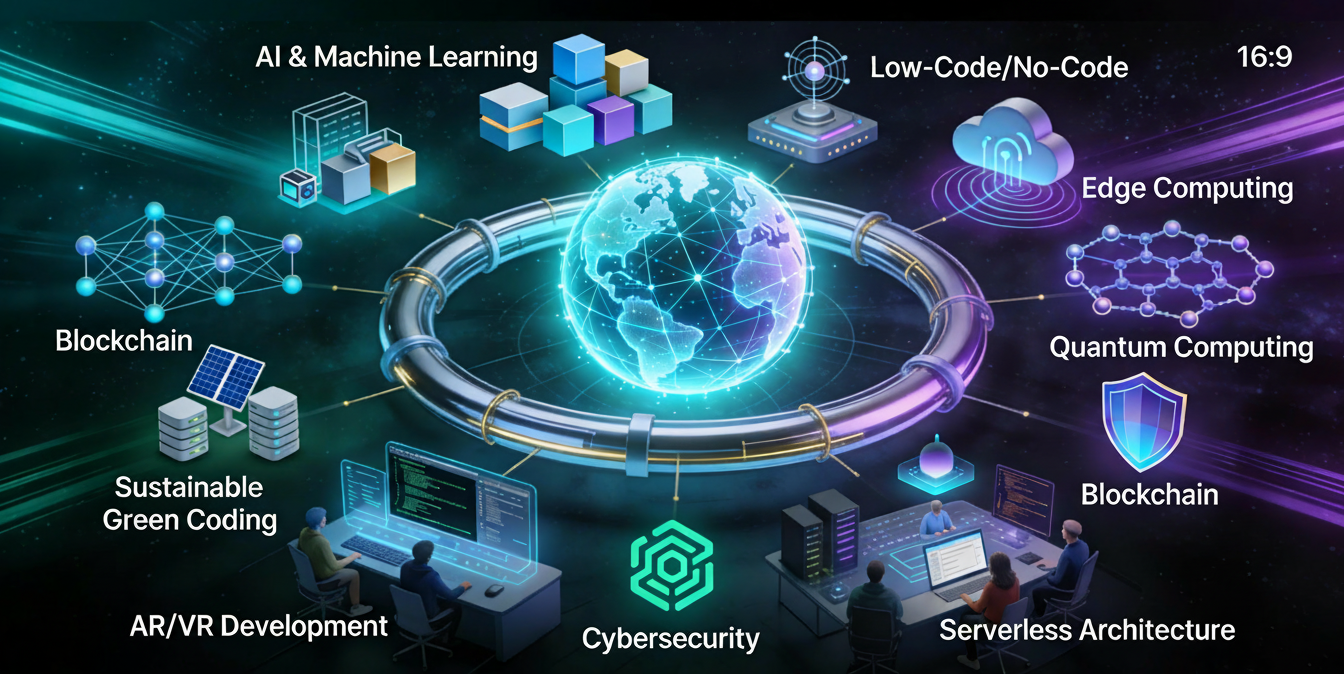
When people hear the word “blockchain,” the first thing that often comes to mind is Bitcoin or cryptocurrency. However, blockchain is much more than a platform for digital money. It’s a revolutionary technology that’s transforming industries by offering security, transparency, and decentralization.
From supply chain tracking and smart contracts to voting systems and healthcare data security, blockchain is redefining the digital landscape. As businesses seek more trust and accountability in their digital systems, blockchain has emerged as one of the most powerful technologies shaping the future of digital transformation.
Let’s dive into how blockchain is being used beyond cryptocurrency, and why it’s becoming the backbone of tomorrow’s economy.
What Is Blockchain?
At its core, blockchain is a distributed digital ledger that records transactions securely and transparently across multiple computers (nodes).
Unlike traditional databases managed by a central authority, blockchain operates on decentralization, meaning no single entity controls the data.
Key Features:
-
Transparency: Every transaction is visible to participants.
-
Immutability: Once added, data cannot be changed or deleted.
-
Security: Cryptographic algorithms protect all data.
-
Decentralization: Eliminates the need for intermediaries.
This makes blockchain ideal for industries that require trust, accountability, and fraud resistance.
Blockchain’s Origins: Cryptocurrency and Beyond
Blockchain first gained fame as the technology behind Bitcoin (introduced in 2009). Its decentralized nature made it perfect for creating a peer-to-peer digital currency without banks or governments.
However, as developers explored its potential, they realized blockchain could revolutionize far more than finance — it could reshape how we exchange, verify, and protect information across any industry.
1. Blockchain in Supply Chain Management
Supply chains are complex networks involving manufacturers, suppliers, distributors, and retailers. Traditionally, tracking products through this chain has been inefficient and prone to fraud.
Blockchain solves these issues by providing end-to-end visibility.
Benefits:
-
Real-time product tracking
-
Verification of authenticity
-
Reduced fraud and counterfeiting
-
Streamlined documentation
For instance, Walmart uses blockchain to track food products from farm to shelf, ensuring food safety and faster recall management.
2. Blockchain in Healthcare
Healthcare systems handle vast amounts of sensitive data — patient histories, prescriptions, insurance records — making data security critical.
Blockchain offers a secure, tamper-proof way to store and share medical records across hospitals, labs, and patients.
Key Benefits:
-
Enhanced data privacy and security
-
Interoperability between healthcare providers
-
Reduced administrative overhead
-
Better patient control over data access
Example: The MediLedger project uses blockchain to prevent counterfeit drugs from entering pharmaceutical supply chains.
3. Blockchain in Banking and Finance
Even though blockchain began in finance, its use is rapidly expanding. Banks now use it for more than cryptocurrency — from speeding up transactions to improving compliance and reducing fraud.
Applications:
-
Cross-border Payments: Faster and cheaper international transfers.
-
Smart Contracts: Automated and transparent financial agreements.
-
KYC & AML Compliance: Secure and decentralized identity verification.
Example: J.P. Morgan’s Quorum blockchain enables efficient and private financial transactions for global clients.
4. Smart Contracts: Automation with Trust
Smart contracts are self-executing digital agreements stored on a blockchain. Once predefined conditions are met, they automatically execute actions — no intermediaries needed.
Benefits:
-
Eliminates third parties
-
Reduces disputes and errors
-
Saves time and cost
For example, in real estate, a smart contract can automatically transfer ownership once payment is confirmed, reducing paperwork and fraud.
5. Blockchain in Government and Voting
Blockchain’s transparency makes it ideal for governance and electoral systems.
Use Cases:
-
E-Voting Systems: Secure, verifiable, and tamper-proof voting processes.
-
Public Record Management: Secure storage for property, birth, and marriage certificates.
-
Tax and Budget Transparency: Prevents corruption and improves accountability.
Estonia, a global leader in digital governance, uses blockchain for citizen ID systems, healthcare, and judicial records.
6. Blockchain in Digital Identity
In today’s digital world, identity theft is a growing concern. Blockchain enables self-sovereign identity (SSI) — giving individuals control over their own digital identity.
Advantages:
-
Users own and control their data
-
Reduced identity theft and fraud
-
Simplified verification for banks, employers, and governments
For instance, Microsoft’s “ION” project builds decentralized digital IDs on the Bitcoin blockchain for secure online authentication.
7. Blockchain in Art and Entertainment
The rise of NFTs (Non-Fungible Tokens) showcases how blockchain empowers artists and creators.
NFTs represent ownership of digital assets such as artwork, music, or videos stored on the blockchain.
Benefits for Creators:
-
Proven digital ownership
-
Direct monetization (no middlemen)
-
Royalty tracking on resales
Platforms like OpenSea and Rarible have revolutionized how digital art is bought and sold, giving creators global exposure.
8. Blockchain in Energy and Sustainability
Energy systems are evolving to include renewable sources and decentralized grids. Blockchain supports this transition by enabling peer-to-peer energy trading and transparent carbon tracking.
Example:
In Germany, companies use blockchain to allow citizens to buy and sell solar energy directly within their community.
This fosters cleaner energy systems and encourages sustainability through real-time energy accounting.
9. Blockchain Security and Privacy
While blockchain ensures transparency, it also offers strong encryption to protect data. However, challenges like scalability, energy consumption, and regulatory uncertainty remain.
Emerging solutions like Proof-of-Stake (PoS), Layer-2 scaling, and Quantum-resistant encryption are helping overcome these hurdles.
The Future of Blockchain
As we move beyond cryptocurrencies, blockchain’s real potential lies in building trust in a trustless world.
By 2030, blockchain is expected to become a core technology in:
-
Digital governance
-
Cross-border supply networks
-
Healthcare interoperability
-
Sustainable energy systems
-
Education and credential verification
In essence, blockchain will underpin the next digital revolution, creating a world that’s secure, transparent, and decentralized.
Conclusion
Blockchain is far more than just the foundation of cryptocurrency — it’s a transformational technology with the power to redefine trust and transparency in the digital age.
Whether it’s tracking food origins, protecting medical records, or enabling secure voting, blockchain is solving real-world challenges across industries.
As adoption grows, blockchain will continue to blur the lines between technology, economy, and society, laying the groundwork for a more connected and accountable world.
FAQs
1. What is blockchain used for besides cryptocurrency?
Blockchain is used in supply chain management, healthcare, digital identity, voting systems, and data security.
2. How does blockchain increase transparency?
All transactions are recorded on a public ledger accessible to authorized participants, reducing fraud and corruption.
3. What are smart contracts?
Smart contracts are self-executing digital agreements stored on a blockchain that automatically enforce terms.
4. Is blockchain secure?
Yes, blockchain uses cryptographic techniques and decentralization to make tampering nearly impossible.
5. What industries will benefit most from blockchain?
Finance, logistics, healthcare, government, and energy sectors are leading blockchain adoption.