The Ultimate Blueprint: How Much Does It Really Cost to Build an AI SaaS Platform?
The gold rush is officially on. Everywhere you look, another “AI-powered” Software-as-a-Service (SaaS) platform is securing funding, going viral on Product Hunt, or disrupting a legacy workflow. It’s an incredibly exciting time to be a builder.
But if you are standing at the starting line, staring at a blank whiteboard and wondering, “How much capital do I actually need to get this thing off the ground?”—you are not alone.
Unlike traditional software, where development costs are relatively predictable, AI applications introduce a wild deck of cards: GPU compute, fluctuating API data tokens, specialized talent, and complex data pipelines.
If you guess your budget incorrectly, you risk running out of runway before your product even clears beta.
In this exhaustive guide, we are going to break down the true cost of building an AI SaaS platform. We will look past the hype and dive deep into the tangible line items: infrastructure, engineering, data acquisition, hidden operational costs, and how to optimize your budget whether you are bootstrapping or venture-backed.
1. The Core Architecture: Wrapping vs. Proprietary Models
Before pulling out a calculator, you must answer a foundational architectural question. Your choice here will dictate your costs by a factor of 10x or even 100x.
Are you building an AI Wrapper or a Proprietary AI Ecosystem?
The AI Wrapper (API-Driven)
An AI wrapper leverages existing Foundation Models (like OpenAI’s GPT-4, Anthropic’s Claude, or Google’s Gemini) via APIs. Your unique value proposition lies in the user experience, workflow integration, proprietary prompts, and specific niche tooling you build around that model.
-
Time to Market: 1 to 3 months.
-
Upfront R&D Cost: Low ($10,000 – $50,000).
-
Ongoing Variable Cost: High (dependent on third-party API pricing per token).
The Fine-Tuned / Open-Source Route
This middle ground involves taking a powerful open-source model (like Meta’s Llama 3 or Mistral) and training it on your specific domain data using techniques like LoRA or QLoRA.
-
Time to Market: 3 to 6 months.
-
Upfront R&D Cost: Moderate ($40,000 – $150,000).
-
Ongoing Variable Cost: Moderate (requires dedicated cloud GPU hosting, but no per-token vendor tax).
The Proprietary Model (Custom LLM/Vision Model)
Building a model from scratch. You gather terabytes of raw data, rent massive GPU clusters, and train a foundational model tailored specifically to an industry (e.g., bio-tech or highly regulated legal tech).
-
Time to Market: 6 to 18+ months.
-
Upfront R&D Cost: Extremely High ($500,000 to millions).
-
Ongoing Variable Cost: Variable, but heavily front-loaded into infrastructure infrastructure maintenance.
Human Founder Advice: If you are a bootstrapper or a first-time founder, start as a wrapper or a fine-tuned open-source model. Validate that the market actually wants your solution before writing six-figure checks to Nvidia or AWS.
2. Breaking Down the Cost Categories
Let’s look at the actual line items required to take an AI SaaS product from an idea to a production-ready application.
Category A: The Engineering & Development Team (The Talent)
Software doesn’t build itself, and AI talent is currently commanding top-of-market premiums. Even if you are a technical founder, you will eventually need a team to scale.
| Role | Estimated Annual Salary (US/Western Europe) | Agency / Fractional Rate (Monthly) |
| AI/Machine Learning Engineer | $140,000 – $220,000 | $12,000 – $20,000 |
| Full-Stack Developer (SaaS Architecture) | $100,000 – $160,000 | $8,000 – $14,000 |
| Data Engineer / DevOps | $120,000 – $180,000 | $10,000 – $16,000 |
| UI/UX Product Designer | $80,000 – $140,000 | $5,000 – $10,000 |
Total MVP Development Cost Estimates:
-
Offshore/Agency Build: $25,000 – $60,000 (Lower upfront cost, but requires rigorous project management).
-
In-house Core Team (3-4 People for 6 Months): $150,000 – $350,000.
Category B: The AI Stack & Infrastructure
Traditional SaaS requires a simple web server and a database. AI SaaS requires an entirely different matrix.
1. Compute & Inferencing
If you use third-party APIs, your costs scale lineally with your users. If you host open-source models, you need virtual machines equipped with dedicated GPUs (like Nvidia A10G, L4, or H100s) through providers like AWS, RunPod, Lambda Labs, or Hugging Face Spaces.
-
API Route Starter Budget: $200 – $2,000/month (scalable).
-
Dedicated GPU instances: $500 – $5,000/month per active model instance.
2. Vector Databases
To give your AI platform a “memory” or to implement Retrieval-Augmented Generation (RAG)—which lets the AI query external business documents safely—you need a vector database.
-
Options: Pinecone, Milvus, Qdrant, Weaviate, or pgvector.
-
Estimated Cost: Free tier to start; $50 – $400/month for production mid-tier datasets.
3. Middleware & LLMOps Tools
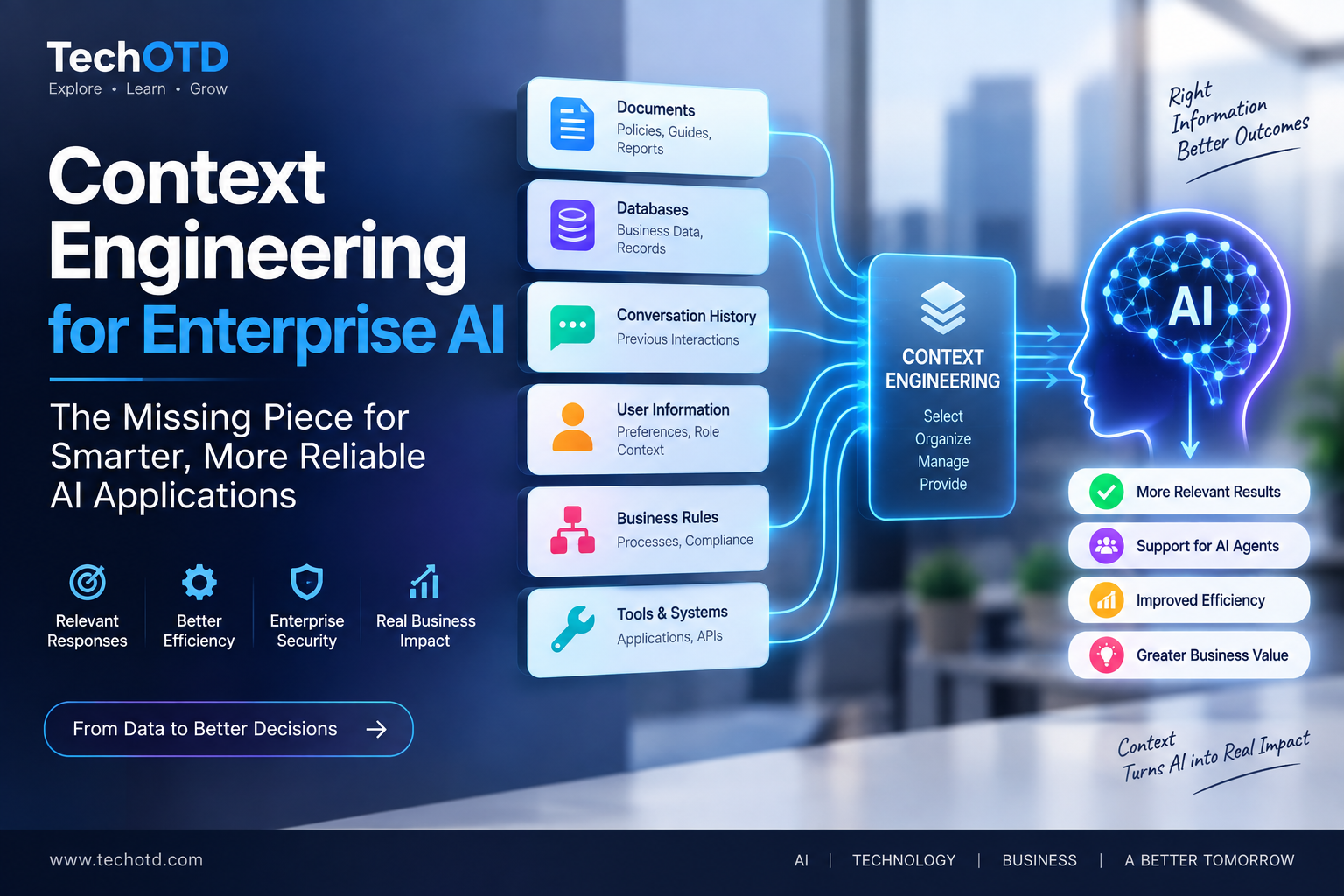
To orchestrate your prompts, manage model fallback options, and track analytics, you’ll use framework tooling like LangChain, LlamaIndex, or Helicone.
-
Estimated Cost: $0 – $300/month early on.
Category C: Data Acquisition, Cleaning, and Guardrails
An AI model is only as good as the information it processes.
-
Data Scraping & Synthesizing: If your platform relies on unique market intelligence, you may need to buy data sets or pay for web scraping APIs (e.g., Bright Data). Cost: $100 – $1,500/month.
-
Content Moderation & Guardrails: To stop your AI from generating harmful, hallucinated, or off-brand content, you must implement safety layers (like NeMo Guardrails or OpenAI’s moderation endpoints). Cost: Negligible at start, but scales with volume.
Category D: The Standard SaaS Core (The “Unsexy” Part)
Don’t get so caught up in the artificial intelligence that you forget it is still a SaaS platform. You need the foundational infrastructure that turns a script into a business.
-
Authentication & User Management: Clerk, Auth0, or Supabase Auth ($0 – $150/month).
-
Billing & Subscription Management: Stripe or Paddle ($0 upfront, takes a ~3% transaction cut).
-
Traditional Cloud Database & Hosting: PostgreSQL/MongoDB hosted on AWS, Vercel, or Heroku ($50 – $500/month).
-
Product Analytics & Error Tracking: Mixpanel, PostHog, LogRocket ($0 – $200/month).
3. Real-World Cost Scenarios: Three Tiers of AI SaaS
To give you a crystal-clear picture, let’s map out three distinct budgets based on the scale of what you are trying to achieve.
Scenario 1: The Bootstrapped Indie Hacker MVP
You are building a specialized copywriting tool for real estate agents or an automated social media video clipper using existing APIs.
-
Team: Just you and a co-founder, or one freelance developer.
-
Tech Stack: Next.js, Vercel, Supabase, OpenAI API wrapper.
-
Development Time: 4 to 6 weeks.
-
Upfront Cost: $5,000 – $15,000.
-
Monthly Run-rate: $200 – $500.
Scenario 2: The Mid-Tier, Fine-Tuned B2B Platform
You are building an AI assistant that analyzes internal corporate legal contracts or medical records. It requires strict privacy, meaning data cannot be sent to public external models.
-
Team: 1 AI Engineer, 1 Full-Stack Developer, 1 Product Manager/Designer.
-
Tech Stack: Custom UI, hosted Llama 3 model on AWS/RunPod, Pinecone vector database for secure enterprise search (RAG).
-
Development Time: 3 to 5 months.
-
Upfront Cost: $75,000 – $150,000.
-
Monthly Run-rate: $2,000 – $6,000.
Scenario 3: The Venture-Backed Enterprise Disrupter
You are building a fully autonomous AI agent network capable of replacing an entire customer support department or generating complete codebases from scratch.
-
Team: A dedicated engineering team of 5–8 specialized AI researchers and platform architects.
-
Tech Stack: Proprietary model architecture, massive pre-training data cycles, multi-region failover clusters.
-
Development Time: 9+ months.
-
Upfront Cost: $350,000 – $1,000,000+.
-
Monthly Run-rate: $15,000+.
4. The Hidden Costs That Can Sink an AI SaaS
Many founders go bankrupt not because they couldn’t build the software, but because they failed to budget for the hidden operational expenses unique to the AI lifecycle.
1. The “Hallucination” and Customer Support Tax
When a normal SaaS app breaks, a button fails to click. When an AI SaaS app breaks, it confidently provides completely incorrect data to an enterprise client. The cost of human-in-the-loop auditing, customer success agents to clean up AI mistakes, and continuous prompt refinement is a massive labor expense.
2. Token Inflation and Context Window Creep
As users fall in love with your platform, they will feed it larger files. Uploading a 5-page PDF costs fractions of a cent. Uploading a 200-page corporate manual can cost $0.50 per query. If you charge a flat subscription rate of $29/month, a few power users can quickly make your profit margins completely negative.
3. API Latency and Caching Infrastructure
AI models are notoriously slow compared to traditional databases. To keep your user experience snappy, you will need to invest in Redis caching layers and edge networks so you don’t call the heavy AI models for repeating, identical queries.
5. Strategic Blueprint to Optimize and Lower Your AI Costs
If the numbers above look intimidating, don’t panic. There are incredibly effective ways to keep your margins high and your burn rate low.
[ Traditional Web Code ] ---> [ Semantic Cache / Redis ] ---> (Match Found? Serve Instantly) | v (Cache Miss) [ Cost-Effective Model (e.g., GPT-4o-mini) ] | v (Complex Task Failover) [ High-Tier Heavy Model (e.g., Claude 3.5 Sonnet) ]Implement “Semantic Caching”
Use tools like GPTCache. If a user asks your platform a question that another user asked 10 minutes ago, serve the cached answer from a standard database rather than processing it through an expensive AI model again. This can slash your compute bills by 30% to 50%.
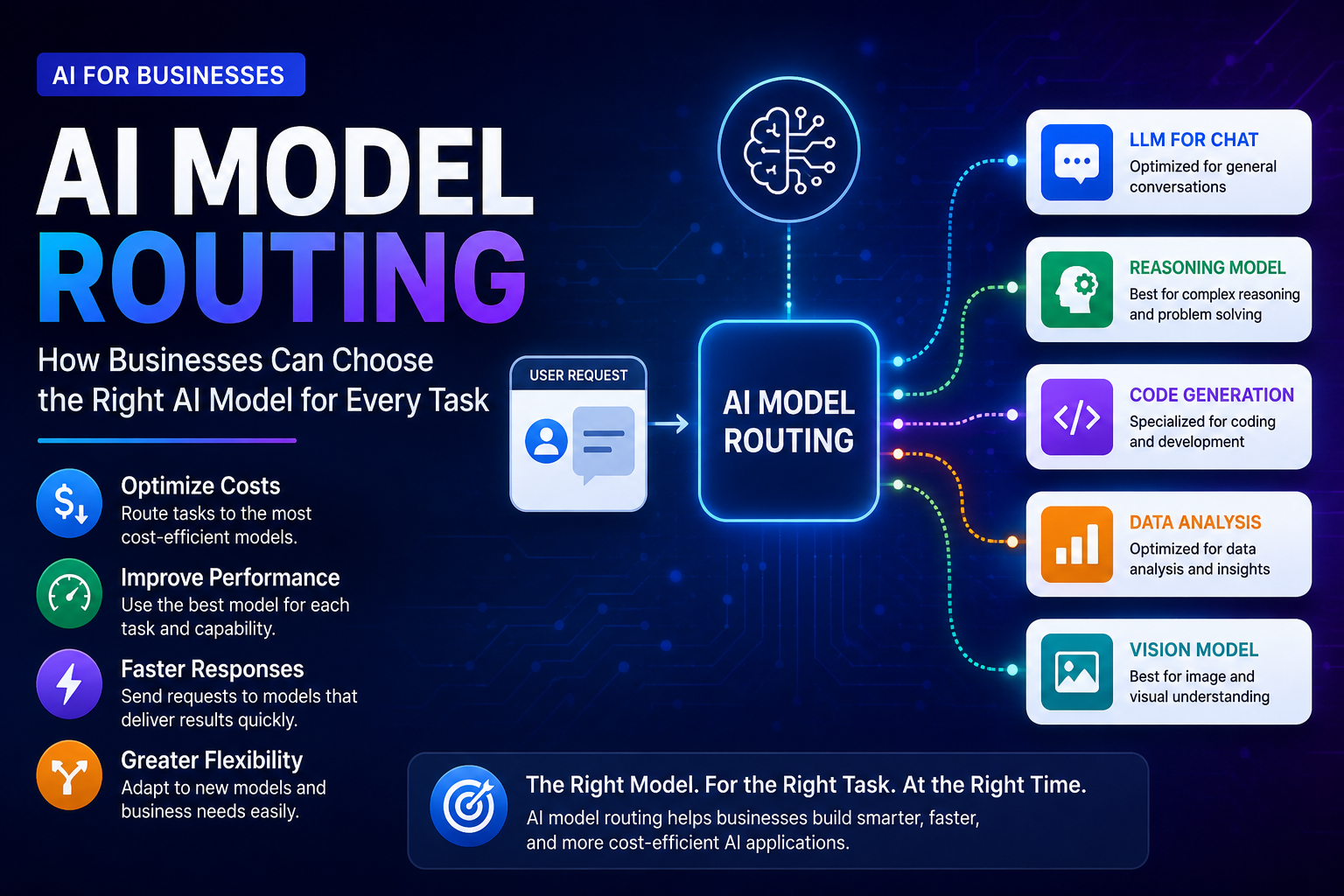
Route Requests Wisely (Model Cascading)
Don’t use your most expensive, heavy AI model for simple tasks. Use a micro-framework to route easy requests (like sorting data or fixing grammar) to cheap, fast models like GPT-4o-mini or Llama-3-8B. Only route complex reasoning tasks to premium models.
Secure Cloud Credits Early
Tech giants are desperate to keep you hooked on their ecosystems. Before paying out of pocket, apply for startup accelerator grants:
-
AWS Activate: Offers up to $100,000 in free cloud compute credits.
-
Google for Startups: Up to $100,000 in Google Cloud and AI infrastructure credits.
-
Microsoft for Startups Founders Hub: Up to $150,000 in Azure credits (which can be used for OpenAI models hosted on Azure).
Final Thoughts: The Verdict
Building an AI SaaS platform doesn’t have to cost millions, but it is no longer as simple as putting a basic layout over a free API script.
To build a sustainable, defensible business, expect a realistic MVP budget to range from $15,000 for small bootstrappers to $100,000+ for enterprise-grade solutions.
Focus heavily on your margins from day one, protect your unit economics against high token usage, and ensure your proprietary data or specialized workflow provides real value that a generic chatbot cannot replicate.