Introduction
There was a time, not too long ago, when launching a web app meant wrestling with a giant. You had to provision servers, worry about load balancers, and lose sleep over whether your “US-East-1” instance would lag for a user trying to access your site from London or Mumbai.
We eventually moved to “Serverless” (think AWS Lambda), which was a huge step forward. But even then, we were still tethered to specific regions. In 2026, the conversation has shifted again. We’re talking about the Edge.
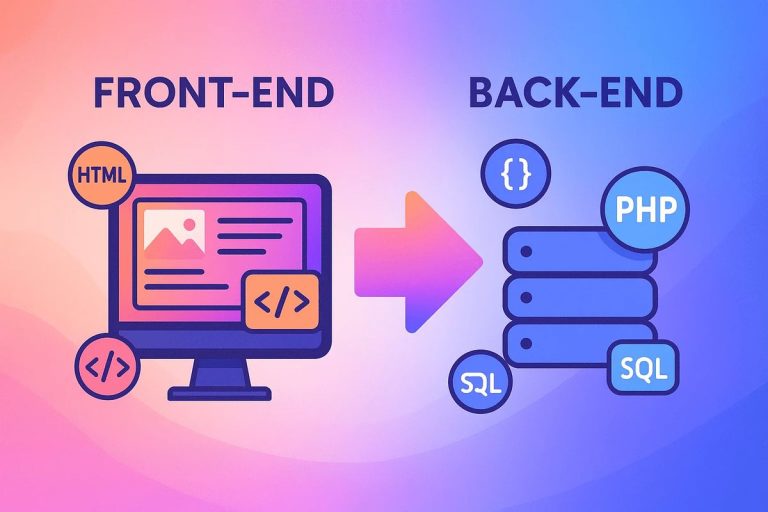
The “Backendless” era doesn’t mean the backend has disappeared—it means the backend has become invisible, lightning-fast, and global by default.
What is “The Edge” Anyway?
If a traditional server is a massive warehouse in the middle of the country, and Serverless is a local delivery hub, then Edge Computing is like having a tiny, specialized shop on every street corner.
Edge Functions (like those from Cloudflare Workers or Vercel) run your code at the “edge” of the network—literally the data center closest to your user. Instead of a request traveling 5,000 miles to a central server and back, it travels 50 miles. We’re talking about cutting response times from seconds to milliseconds.
Why “Backendless” is the 2026 Standard
For a modern developer, “Backendless” is a philosophy. It’s about focusing on the product, not the plumbing. Here is why this shift is actually happening:
-
The Death of Latency: In the modern web, speed is a feature. If your site takes more than two seconds to load, your conversion rate doesn’t just dip—it craters. Edge functions handle things like authentication, A/B testing, and localization instantly, right at the point of entry.
-
Infinite Scalability (Without the Headache): Because Edge functions are distributed globally, you don’t “scale” them. They are already everywhere. If you go viral and get 1 million hits in an hour, the Edge network handles it without you having to click a single “increase capacity” button.
-
Security by Design: By moving logic to the Edge, you can intercept malicious requests before they ever touch your database. It’s like having a security guard at the front gate instead of at the bedroom door.
The Tools Making it Possible
You don’t need a PhD in systems architecture to go backendless. The ecosystem in 2026 is incredibly friendly:
-
Supabase & Firebase: These provide the database and auth layers that “just work” with Edge functions.
-
Upstash: For when you need a global Redis database that is as fast as your Edge code.
-
Prisma Accelerate: For connecting your Edge functions to traditional databases without the “cold start” connection lag.
A New Way of Thinking
The hardest part of going “Backendless” isn’t the code—it’s the mindset shift. You have to stop thinking about your app as a “thing” sitting on a server in Virginia. Instead, you start seeing it as a living, breathing entity that exists everywhere at once.
You spend less time on SSH terminals and more time on user experience. You spend less time on infrastructure and more time on the features that actually make your users’ lives better.
The “Cold Start” Killer: Why Edge Wins
One of the biggest frustrations with traditional Serverless functions (like standard AWS Lambda) is the “cold start.” This happens when your code hasn’t been run in a while, and the cloud provider has to “wake up” a container to execute it. This can add 2–5 seconds of lag—an eternity in web time.
Edge Functions play by different rules. Because they run on lightweight “Isolates” (like the V8 engine that powers Chrome) rather than full virtual machines, they start up in roughly 5 milliseconds.
-
Standard Serverless: Wake up → Load OS → Load Runtime → Run Code = Lag.
-
Edge Functions: Run Code = Instant.
In 2026, if you’re building a checkout page or a login redirect, that difference is the gap between a sale and a bounce.
Practical Strategies: When to go “Backendless”
Going backendless doesn’t mean you have to migrate your entire infrastructure overnight. Most developers are taking a “hybrid” approach. Here is how you can start implementing this today:
-
Dynamic Personalization: Use an Edge Function to check a user’s location or browser language and serve a custom version of your homepage without any “flicker” or layout shift.
-
A/B Testing without the JS Bloat: Traditional A/B testing tools (like Optimizely) often slow down the frontend with heavy scripts. With Edge Functions, you can split traffic at the server level. The user gets exactly what they need, and your Google Lighthouse score stays perfect.
-
Authentication Gates: Instead of checking if a user is logged in at the page level (which shows a “loading” state), check at the Edge. If they aren’t authorized, redirect them before the page even begins to render.
The Cost Factor: Is it Cheaper?
Usually, yes. Because Edge Functions are so lightweight and run so fast, you aren’t paying for “idle time.” You pay for the execution. For most small to mid-sized apps, the “Free Tier” on platforms like Cloudflare or Vercel is so generous that you might not see a bill for months.
However, keep in mind that Edge Functions are meant for fast tasks. If you’re doing heavy video encoding or massive data processing, you might still need a “fat” background worker. The trick is knowing which tool to pick for the job.
Conclusion: Focus on What Matters
The “Backendless” movement isn’t about the technology being gone; it’s about the technology getting out of your way. By leveraging Edge Functions, we are finally reaching a point where the distance between a developer’s idea and a global, high-performance reality is almost zero.
If you’re still managing a fleet of traditional servers for a modern web app, it’s time to ask yourself: Are you building a product, or are you just managing a digital museum? The Edge is calling. It’s time to answer.