Introduction
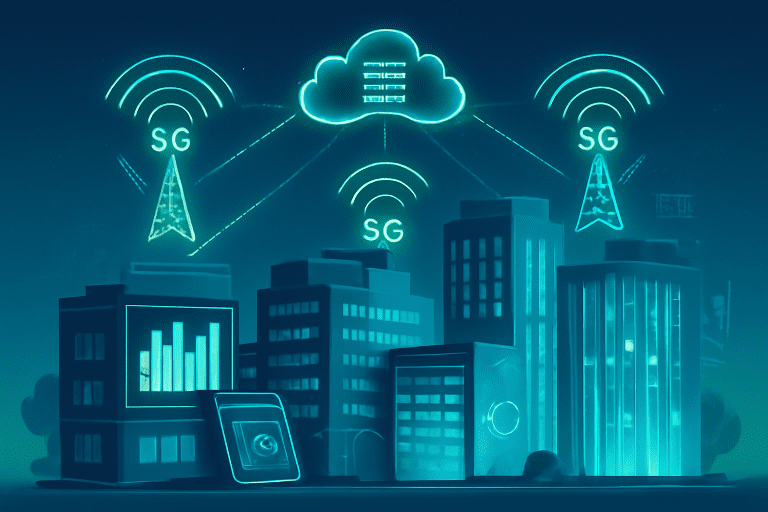
The arrival of 5G wireless technology is revolutionizing enterprise connectivity, promising multi-gigabit speeds, ultra-low latency, and support for billions of connected devices. However, to truly unlock the transformative potential of 5G, enterprises must integrate Mobile Edge Computing (MEC) into their digital infrastructure. 5G edge computing moves computation and data processing closer to where data is generated—at the “edge” of the network—enabling faster response times, greater security, and empowering real-time business innovation.
Explore how AI-powered Mobile Edge Computing solutions can transform business processes at TechOTD AI Services.
What is Mobile Edge Computing (MEC)?
Mobile Edge Computing (MEC) is a network architecture that brings computing, storage, and analytics capabilities out of centralized data centers and closer to the physical location of devices and users.
This proximity accelerates data processing and decision-making—critical in the 5G edge computing era where speed, responsiveness, and high-bandwidth are no longer optional but foundational to enterprise competitiveness.
The Symbiosis of 5G and Mobile Edge Computing
-
Ultra-low Latency: 5G networks promise sub-millisecond latency. Mobile Edge Computing (MEC) is essential for achieving these targets since only local processing can deliver true real-time responses for autonomous vehicles, telemedicine, and AR/VR solutions.
-
High Bandwidth Utilization: With 5G’s massive data throughput, 5G edge computing prevents bottlenecks and network congestion.
-
Reliability & Resilience: MEC in 5G networks reduces reliance on continual cloud connectivity, making operations more robust against outages and delivering superior quality of service.
Key Benefits of Mobile Edge Computing for Enterprises
-
Real-Time Data Processing
Processing data locally enables ultra-fast analytics required for applications like predictive maintenance, intelligent video surveillance, and automated supply chains.✅ Example: A smart factory uses 5G edge computing with MEC to process IoT sensor data, optimizing equipment performance and reducing downtime—without sending all data to the cloud.
-
Enhanced Security & Privacy
By handling sensitive data close to its source, Mobile Edge Computing minimizes interception risks. Industries like healthcare and finance benefit from localized compliance and data residency. -
Reduced Network Congestion & Costs
Offloading computation from central servers to the edge decreases backhaul requirements, making MEC in 5G both cost-efficient and scalable. -
Greater Scalability & Flexibility
Mobile Edge Computing enables modular deployment of enterprise apps, scaling easily across retail, logistics, and smart cities.
Industry Use Cases of Mobile Edge Computing
-
Manufacturing: Smart factories rely on 5G edge computing for predictive analytics, digital twins, and real-time equipment monitoring.
-
Retail: Edge-enabled personalization, AR shopping, and real-time customer engagement enhance user experience.
-
Healthcare: Secure telemedicine, real-time imaging, and patient monitoring with Mobile Edge Computing in healthcare.
-
Logistics & Transportation: Smart fleet management and navigation powered by MEC and 5G.
-
Smart Cities: IoT-driven traffic management, safety, and environmental monitoring with edge computing in 5G networks.
Conclusion
Mobile Edge Computing (MEC) is critical for enterprises in the 5G era because it enables:
-
Ultra-low latency, reliable, and scalable real-time applications
-
Enhanced data security, privacy, and compliance
-
Cost-effective handling of massive, distributed data flows
-
Seamless integration with AI, IoT, and blockchain technologies
-
Robust digital transformation strategies powering growth and innovation