Introduction
The restaurant industry is one of the most competitive markets in the world. From small cafés and food trucks to fine-dining restaurants and international chains, the battle for customer attention is constant. In such a fast-paced environment, technology is no longer a luxury—it’s a necessity.

One of the most powerful tools a restaurant can use today is a mobile app. A custom-built app gives restaurants the power to connect directly with customers, streamline operations, boost sales, and build loyalty.
According to Statista, the global online food delivery market is expected to surpass $466 billion by 2027, and a large share of this growth is driven by mobile applications. Customers now expect restaurants to offer the convenience of browsing menus, placing orders, and even earning rewards—all from their smartphones.
But here’s the key question: Why should you invest in a mobile app for your restaurant?
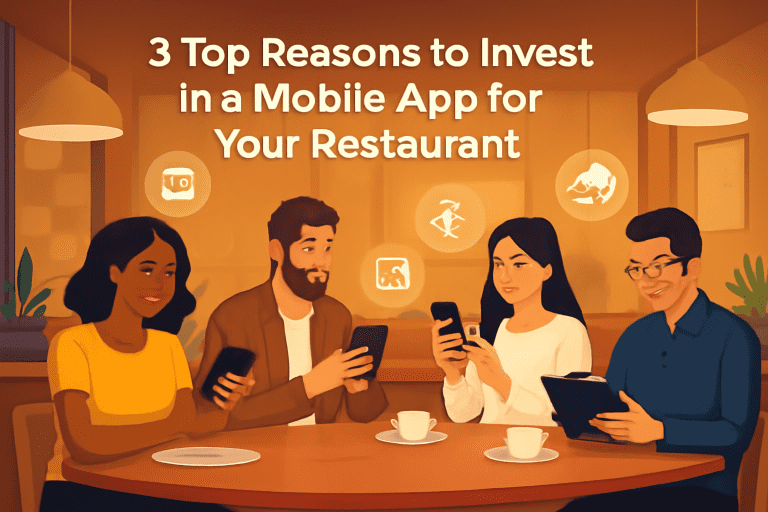
While there are countless benefits, this blog will focus on the 3 top reasons:
-
Enhanced Customer Convenience and Experience
-
Boosted Revenue Through Online Ordering & Delivery
-
Improved Customer Loyalty and Brand Engagement
Let’s dive deep into each reason and explore why a mobile app could be the smartest investment your restaurant can make.
Reason 1: Enhanced Customer Convenience and Experience
The Rise of “On-Demand” Dining
Customers today value convenience above everything else. Whether they’re ordering from home, booking a table in advance, or customizing a dish, they expect restaurants to cater to their preferences seamlessly.
A mobile app makes this possible by offering features like:
-
Digital Menus with pictures, prices, and descriptions
-
Table Reservations without phone calls
-
One-Click Reordering for regular customers
-
Contactless Payments via UPI, credit/debit cards, and wallets
Imagine this: A customer is on their way home from work. Instead of calling your restaurant and waiting on hold, they open your app, reorder their favorite meal with one tap, and it’s ready by the time they arrive. That level of convenience builds loyalty.
Case Study: Starbucks Mobile App
Starbucks has one of the most successful restaurant apps in the world. Their app allows users to order ahead, pay digitally, and skip the line. In 2022, 26% of Starbucks’ transactions in the U.S. came through their mobile app. That’s the power of customer convenience.
Key Benefits for Restaurants
-
Reduced Wait Times: Faster ordering means higher table turnover.
-
Error-Free Orders: Customers input their own preferences, reducing mistakes.
-
Accessibility: Customers can place orders anytime, anywhere.
When your app makes life easier for customers, they’ll naturally choose you over competitors who don’t offer such convenience.
Reason 2: Boosted Revenue Through Online Ordering & Delivery
Food Delivery is Exploding
Food delivery apps like Swiggy, Zomato, Uber Eats, and DoorDash have changed how people order food. But relying solely on third-party apps comes with high commission fees (15–30%). A restaurant’s own mobile app eliminates this problem.
With your own app, you:
-
Keep 100% of the profit (no commission fees).
-
Gain direct control over customer data.
-
Offer special discounts to drive repeat sales.
Example: Domino’s Pizza
Domino’s invested heavily in mobile ordering early on. Today, over 70% of Domino’s sales come from digital platforms, with mobile being the primary channel. By cutting reliance on third-party platforms, Domino’s boosted both profits and customer loyalty.
Upselling and Cross-Selling Opportunities
Mobile apps can be designed to recommend add-ons and combo meals. For example:
-
If a customer orders a burger, the app suggests fries and a drink.
-
If they order a pizza, the app offers extra cheese or dessert.
This digital upselling strategy significantly increases average order value (AOV).
Improved Delivery Management
Apps also allow restaurants to:
-
Integrate real-time delivery tracking.
-
Assign delivery staff more efficiently.
-
Send push notifications when food is ready.
All of this improves customer satisfaction while ensuring smooth business operations.
Reason 3: Improved Customer Loyalty and Brand Engagement
Why Loyalty Matters in the Restaurant Industry
In a market where customers are spoiled with options, retaining a customer is cheaper than acquiring a new one. Studies show that:
-
Acquiring a new customer can cost 5–7 times more than retaining an existing one.
-
Loyal customers spend 67% more than new customers.
A mobile app provides the perfect platform to build loyalty.
Features That Build Loyalty
-
Reward Programs: Points for every purchase, redeemable for discounts/free meals.
-
Personalized Offers: Based on customer history (e.g., “50% off on your favorite pizza”).
-
Push Notifications: Keep customers engaged with daily specials and limited-time offers.
-
Gamification: Customers can unlock badges, levels, or freebies for frequent purchases.
Case Study: McDonald’s App
McDonald’s app has become a global success, largely due to its loyalty rewards system. Customers regularly use the app to claim personalized offers and discounts, making it one of the most downloaded food apps worldwide.
Social Media & Branding
Your app also doubles as a branding tool. Every time customers open it, they’re reminded of your restaurant’s name, logo, and unique offerings. Unlike third-party apps, your app builds your brand, not someone else’s.
Additional Benefits of a Mobile App for Restaurants
While the three main reasons above are the most powerful, here are some bonus benefits that come with having a mobile app:
-
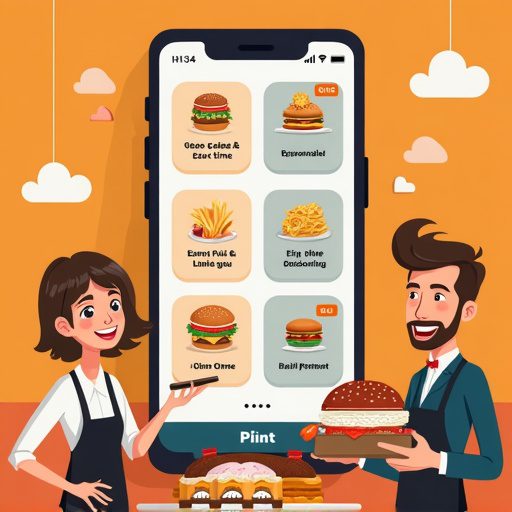
Direct Marketing Channel – Push notifications and in-app messages reach customers instantly.
-
Customer Data Insights – Track order frequency, popular dishes, and customer preferences.
-
Reduced Operational Costs – Automated ordering reduces staff workload.
-
Competitive Advantage – Stand out from restaurants that still rely only on offline or third-party services.
Addressing Common Concerns
“Isn’t it expensive to build a restaurant app?”
Not necessarily. With today’s development tools, even small restaurants can build cost-effective apps. The ROI (Return on Investment) often outweighs the initial cost within months due to increased sales and customer loyalty.
“What if my customers prefer Zomato/Swiggy?”
You don’t have to abandon third-party apps. Instead, use them to attract new customers while encouraging repeat customers to use your own app for better discounts and loyalty rewards.
“What if I don’t have delivery services?”

Even without delivery, an app can handle reservations, pre-orders, takeaways, and loyalty programs.
FAQs About Restaurant Mobile Apps
Q1. Do small/local restaurants really need a mobile app?
Yes! Even small restaurants can benefit from apps by reducing reliance on third-party platforms, offering loyalty programs, and connecting directly with customers.
Q2. Can I integrate my POS system with the app?
Absolutely. Most modern restaurant apps can integrate with your POS, ensuring smooth order management.
Q3. How do apps help with marketing?
Apps provide direct communication with customers via push notifications, personalized offers, and promotions, which is far more effective than social media ads alone.
Q4. Do customers actually download restaurant apps?
Yes—especially if you offer exclusive discounts, faster ordering, and loyalty rewards that they can’t get anywhere else.
Conclusion
In today’s competitive restaurant landscape, a mobile app is no longer optional—it’s essential.
The 3 top reasons to invest in one are clear:
-
Enhanced Customer Convenience & Experience
-
Boosted Revenue Through Online Ordering & Delivery
-
Improved Customer Loyalty & Brand Engagement
From Domino’s to Starbucks to local cafés, restaurants worldwide are proving that apps drive growth, profitability, and customer satisfaction.